Appliance pickup services handle the heavy lifting, safe removal, and proper disposal of fridges, washers, dryers, and more. The crew protects your home, disconnects simple lines when appropriate, and routes items for recycling, donation, or disposal. Expect clear steps, practical timing, and environmentally responsible outcomes from a reputable local provider in Bothell.
A Saturday morning fridge swap sounds simple—until stairs, tight turns, and old water lines add stress. That’s why many homeowners call Bothell WA Junk Removal. With the right plan, removal is quick, careful, and clean. This guide explains each step, what to expect, and how to pick a trusted local team.
Table of Contents
- What do appliance pickup services include?
- How does the removal process work from booking to haul-away?
- How much does appliance pickup cost and what affects the price?
- What should I do before my appliance pickup arrives?
- Where do old appliances go—are they recycled responsibly?
- What about heavy, hazardous, or special appliances?
- How do I choose a reliable appliance pickup service near me?
- Key takeaways
- Frequently Asked Questions
- Conclusion
What do appliance pickup services include?
Appliance pickup includes safe removal, loading, and lawful disposal. The team protects floors, doorframes, and stairs. They handle weight, tight turns, and stairs with proper gear. Many services also disconnect water or power if the lines are simple and safe to access.
Appliances that are commonly removed include refrigerators, freezers, washers, dryers, dishwashers, ovens, ranges, microwaves, window AC units, water heaters, and trash compactors. Some teams also take built‑ins, wine fridges, and commercial‑grade pieces. Ask first about size, weight, or special hookups to avoid surprises.
In-home pickup means the crew comes inside, pads the path, and carries the unit out. Curbside pickup is faster and lower contact: you bring the item to the driveway or curb, and the crew loads it. Curbside works well if you can move the item and want a tight time window. In-home is best for bulky or risky units.
- Curbside pros: quicker visits, simple timing, often lower effort for the crew.
- In-home pros: no lifting for you, safer path control, better for stairs or narrow halls.
Many junk removal companies, including Bothell WA Junk Removal, can pair appliance pickup with Residential Junk Removal for one trip. That helps when you also have a sofa, a mattress, or garage clutter to go.
How does the removal process work from booking to haul-away?
The process starts with a quick call or online booking. You’ll share the item type, size, location in the home, and access notes. Photos help, especially for stairs or tight turns. You’ll get a pickup window and any prep steps, like clearing space or unplugging the unit.
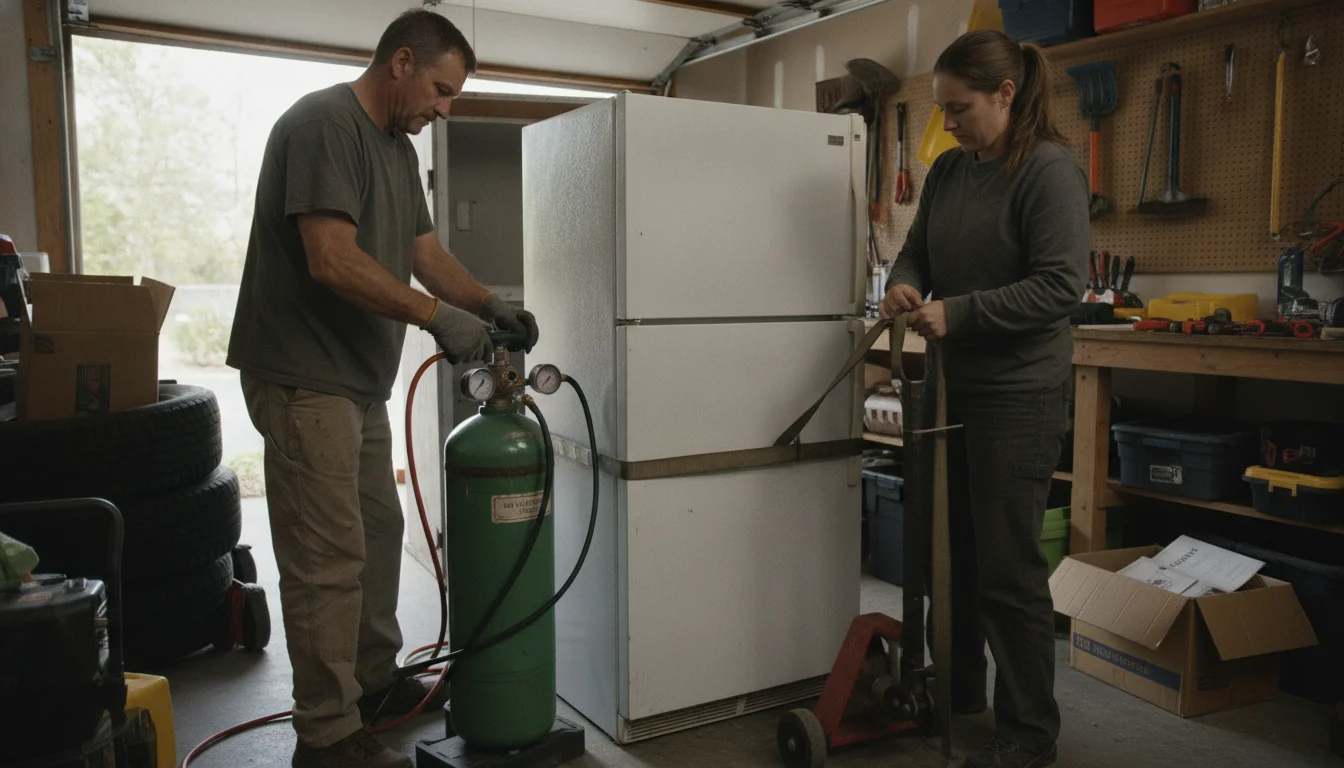
On pickup day, the crew arrives, greets you, and walks the path from the appliance to the truck. They lay floor protection and pad sharp edges. The team disconnects basic water lines or power if agreed. For gas, they confirm the line is shut off and capped. Then they lift with dollies and straps, move slowly, and load the unit.
What happens on pickup day step by step?
- Walkthrough and safety check.
- Protect floors and corners.
- Disconnect basics if planned.
- Lift, navigate, and load.
- Confirm the area is clean and dry.
After loading, the crew transports the item to the right facility. Fridges and AC units with refrigerant go to approved processors that recover and handle gases under federal rules. Metals move to recycling yards. Clean, working units may go to donation partners or refurbishers.
What occurs after pickup: transport and disposal chain
A good company tracks where items go. They separate metal, plastic, glass, and sealed systems. They keep records for regulators and for their own audits. You can ask for a disposal summary if you need proof for a building manager or HOA.
How much does appliance pickup cost and what affects the price?
Prices vary by item size, weight, access, and distance. Stairs, long carries, or complex disconnects can add time. Combining items in one trip may be more efficient than separate visits. Rural areas may have longer drive times. Urban pickups may take more care with parking and elevators.
Common pricing models include per‑item pricing for standard units and volume or time‑based pricing for mixed loads. If a unit needs special handling, like a built‑in fridge or stacked laundry center, that can change the quote.
Why quotes vary
Independent cost surveys and local rules change over time, and actual prices depend on the job. Many homeowners find that sharing photos helps get a firmer estimate up front. If you need extra services—like capping a gas line by a licensed pro—plan for that work before pickup.
Ways to make pickup day faster
- Group items: add a microwave, old TV, or small junk in one visit.
- Choose curbside if you can move the unit safely.
- Clear the path to cut onsite time.
- Book during normal hours; off‑hour requests can be limited.
- Ask about combining Appliance Removal with House Cleanout or Furniture Removal when you’re downsizing.
Bothell WA Junk Removal can outline options that fit your home and schedule. Clear info helps the team size the truck space and send the right gear the first time.
What should I do before my appliance pickup arrives?
Simple prep makes the visit smooth. Empty the appliance and wipe up spills. For fridges and freezers, defrost 24 hours ahead so water does not leak on floors. Move rugs, plants, or end tables out of the path. Crate pets. Tell the crew about stairs, narrow halls, or an elevator.
Safety prep and disconnecting utilities
Unplug electric units the night before. Turn off water valves and disconnect hoses from washers. For ice makers, turn off the supply valve. Gas lines must be shut off and capped—leave this to a licensed plumber or gas tech. If a valve sticks or leaks, do not force it.
Access, parking, and building requirements
Reserve a parking spot if you can. In apartments, check with your building about elevator pads, certificates of insurance, or time limits. Share gate codes or concierge details. If the crew needs to remove doors from hinges for a big fridge, plan a clear spot to set them safely.
If weather is bad, clear snow or leaves on steps and walks. Good lighting helps with safe footing. The crew will bring ramps and floor runners, but your path plan makes the job quicker and kinder to your home.
Where do old appliances go—are they recycled responsibly?
Many appliances are recycled for metal, plastic, and glass. Units with refrigerant, like fridges and ACs, need special handling. The refrigerant must be recovered by certified techs under EPA Section 608 rules to protect air quality. Oil, foam, and capacitors may also need safe disposal.
How recycling and de-manufacturing work
At a recycling or de‑manufacturing site, crews remove doors, drain oils, and pull out compressors. Metals are shredded and sorted by type. Plastics and glass are separated. Recovering refrigerant and other substances reduces harmful releases.
When donating or refurbishing makes sense
If a unit works and is safe, donation can help local groups. Basic washers, dryers, and stoves often find a second home. Refurbishers may repair light issues and resell. Check that cords are intact and there are no leaks. Charities may prefer curbside transfer to keep their staff safe.
Some programs promote proper recovery of refrigerants and materials from old fridges and freezers. You can ask whether your provider uses recyclers that recover refrigerant and foam from old units.
What about heavy, hazardous, or special appliances?
Very heavy units, like built‑in fridges, stacked washers and dryers, or large freezers, need extra gear and planning. Crews may remove doors, adjust hinges, or use stair climbers. For basement units, tight turns can call for rail padding and slower moves. Patience and communication prevent damage.
Refrigerants, gas lines, and legal compliance
Refrigerants in fridges and AC units must be recovered by certified personnel under federal law. Releases harm the environment and can carry penalties. Gas lines must be shut off and capped by a qualified pro before removal. Ask your provider what they handle and what you must arrange.
Stairs, tight spaces, and preventing damage
Pros use dollies, shoulder straps, sliders, and floor runners. They pad banisters and corners. They may remove fridge doors or room doors to gain inches. If a wall is at risk, they pause and reset. Good teams carry insurance for peace of mind, and they document the condition before and after.
If your appliance is in an attic, over a garden, or behind a narrow island, share photos during booking. The crew can bring the right tools, extra hands, or a smaller secondary dolly for tricky landings.
How do I choose a reliable appliance pickup service near me?
Look for a company that explains their process clearly, shows proof of insurance, and has clean, recent reviews. Ask how they handle recycling, donation, and regulated materials. A good team gives arrival windows and updates. They show up with floor protection, proper tools, and respectful staff.
Key questions to ask before you book
- Do you handle in‑home and curbside pickup, and what do you recommend for my space?
- Will you disconnect basic water lines or power, and what should I do ahead of time?
- How do you handle refrigerants and regulated waste?
- What happens to my appliance after pickup—recycle, donate, or disposal?
- Can you provide any building‑required documentation (such as certificates) if needed?
Red flags to avoid and signs of quality
Red flags include vague answers about disposal, no insurance, pushy upsells, and poor communication. Signs of quality include clear prep lists, careful walkthroughs, floor protection, and transparent post‑pickup routing. Local knowledge helps with parking, elevators, and HOA rules in Bothell and nearby neighborhoods.
If you need more than one item gone, ask about bundling with Residential Junk Removal. When downsizing or moving, House Cleanout can save time. If your sofa and old range both need to go, pairing Appliance Removal and Furniture Removal in one trip is simple.
Key takeaways
- Plan the path: clear space, disconnect basics, and reserve parking for a smooth visit.
- Choose the right pickup: curbside for speed; in‑home for heavy or tricky items.
- Ask about disposal: look for clear recycling and donation options with records.
- Mind safety rules: refrigerants and gas lines require proper handling.
- Bundle smart: combine items or services for one efficient trip.
Frequently Asked Questions
Can a crew disconnect my water or power lines?
Many teams can handle simple water and power disconnects if valves and outlets are easy to access. Gas lines should be shut off and capped by a qualified pro before pickup. Share photos during booking so the team knows what to expect and can guide you on prep.
Do I need to empty and defrost my fridge before removal?
Yes. Empty the fridge and freezer, and defrost at least 24 hours before pickup. This prevents leaks on floors and stairs, protects the crew, and speeds up the visit. Wipe up moisture and leave doors open to air out before the team arrives.
What happens to my old refrigerator after it’s hauled away?
It depends on condition. Units with refrigerant go to approved processors to recover gases under federal rules. Metals are recycled, and usable parts may be salvaged. If the fridge works and is safe, it may be donated or refurbished for reuse by local partners.
Can you remove appliances from upstairs or a basement?
Yes, but stairs, tight turns, and heavy weight need extra care and tools. Crews use dollies, straps, and pads to protect your home. Share photos of stairwells, railings, and landings so the team can plan the safest route and send the right equipment.
What if I live in a building with elevator rules and insurance needs?
Tell the company during booking. Many providers can supply certificates of insurance and schedule within building windows. They’ll pad elevators and follow house rules. Share any time limits, loading dock info, and concierge contacts to keep the day smooth.
Conclusion
From first click to final haul, a good team makes appliance removal simple, safe, and environmentally responsible. Bothell WA Junk Removal serves homes across Bothell and the wider area, handling careful in‑home pickups, convenient curbside options, and responsible recycling.
Ready to schedule appliance pickup with Bothell WA Junk Removal? Contact us.
If you are not sure which of these you are dealing with, it is worth having someone look at it before it turns into a bigger job. Get in touch with Bothell WA Junk Removal today and we will tell you where you stand.