A drywall removal service handles the safe tear-out, loading, hauling, and cleanup of old drywall, plaster, and related debris. The work may cover one room, a full home, or a job site. Bothell WA Junk Removal can help owners plan around access, safety, debris type, and project timing.
Table of Contents
- What Does a Drywall Removal Service Include?
- What Types of Drywall and Plaster Can Be Removed?
- How Is Drywall Removed Safely From a Home?
- How Does Drywall Removal Work on a Construction Job Site?
- How Is Drywall Debris Sorted, Loaded, and Disposed Of?
- How Does Drywall Hauling Compare With Broader Construction Cleanup?
- When Should You Hire a Professional Drywall Removal Service?
- Key Takeaways
- Frequently Asked Questions
- Conclusion
What Does a Drywall Removal Service Include?
A drywall removal service often includes planning, tear-out, loading, hauling, and cleanup. The work depends on the room size, wall condition, access, and debris type. A clear plan helps keep the work safe and orderly.
Initial assessment and removal planning
The first step is to review the work area. The crew checks the walls, ceilings, doors, stairs, walkways, and nearby surfaces. This helps find the safest path for carrying debris out.
The crew may ask if the drywall is loose or still attached. Attached drywall needs careful removal with hand or power tools. Loose pieces may only need gathering and loading. The plan may change if workers find framing, wires, plumbing, insulation, or other materials behind the wall.
Owners should point out surfaces that need protection. These may include finished floors, cabinets, appliances, furniture, landscaping, and entrances. The crew can also explain which spaces are ready for cleanup and which spaces still need to stay open.
Labor, loading, and job site cleanup
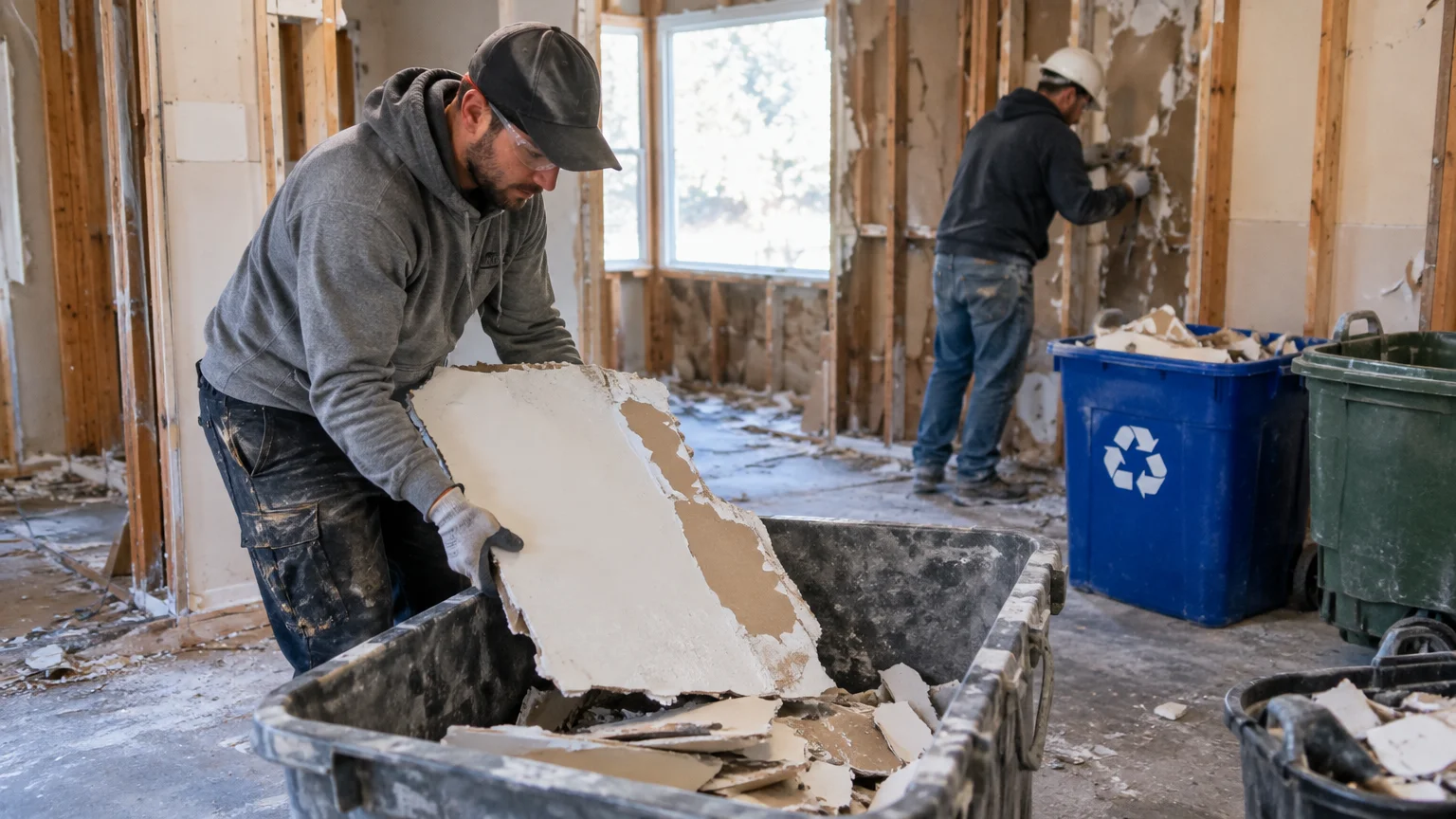
Removal may include pulling down wall panels and breaking large pieces into smaller sections. The crew then carries the debris to the truck or container. After loading, workers check for scraps, screws, nails, and joint compound.
A complete cleanup matters because small debris can cause trips and slow the next work stage. Some projects also leave wood trim, insulation, metal studs, or broken tile. Bothell WA Junk Removal can help Bothell homeowners and contractors decide which materials belong in one cleanup plan.
What Types of Drywall and Plaster Can Be Removed?
Most crews can handle common drywall, plaster, ceiling panels, and remodel debris. The materials should still be reviewed before work starts. Older buildings may contain layers or products that need special care.
Standard drywall, plaster, and joint compound
Standard drywall is also called gypsum board or wallboard. It has a gypsum core between paper layers. It is common in homes, offices, and retail spaces. Joint compound is the paste used to cover seams, screws, and corners.
Plaster is different from drywall. It is often harder, heavier, and attached to wood or metal lath. Lath is a support layer behind plaster. Removing plaster may create more dust and smaller pieces than removing modern drywall.
A crew may remove painted drywall, damaged panels, ceiling board, and remodel waste. They may also collect joint compound, corner bead, tape, and loose fasteners. Owners should share details about the building’s age and the planned tear-out.
Ceiling materials and renovation tear-out debris
Ceiling drywall may be removed during a remodel, water damage repair, lighting project, or room change. Ceiling work needs extra care because debris can fall from above. Workers may also need to work around lights, vents, and sprinkler parts.
A wider cleanup may include wood scraps, cabinets, flooring, insulation, metal, and broken fixtures. A junk removal crew can often gather these items when the plan includes mixed construction debris. The crew should know about unusual materials before arriving.
Materials that may contain hazards need special handling. Suspected asbestos, lead paint, mold, chemicals, and other hazards should not be mixed with regular debris. Testing and removal may need qualified specialists who follow local rules.
How Is Drywall Removed Safely From a Home?
Safe drywall removal starts with preparation, controlled tear-out, and careful debris handling. Homeowners may handle light sweeping and safe cleanup. Large tear-outs can create dust, sharp waste, and hidden risks.
Preparing rooms, surfaces, and access points
Before work starts, clear furniture, decorations, and loose items from the area. Doorways and finished floors may need protective coverings. The path from the room to the loading area should stay clear.
Utilities also need attention. Workers should know where wires, plumbing lines, heating ducts, and other systems may be found. No one should cut into a wall without checking for hidden services first.
Windows and doors may help with airflow, but they do not replace dust control. Fans should not spread dust into clean rooms. Children, pets, and other people should stay away until the work and cleanup are done.
Managing dust, fasteners, and hidden hazards
Drywall dust is fine and can move through a home. Workers may use masks, eye protection, barriers, and careful loading to limit its spread. Large panels should be handled in ways that protect walls, floors, and door frames.
Old drywall can hide nails, screws, sharp metal, broken wood, and damaged wires. Plaster may fall in heavy pieces. Wet materials may also be heavier and harder to carry. These conditions can make the job unsafe for one person.
A homeowner does not always need a professional for light sweeping or a few safe scraps. Professional help is better for full-room tear-outs, ceilings, stairs, large loads, tight access, or unknown materials. The work area should be checked before anyone begins.
How Does Drywall Removal Work on a Construction Job Site?
On a construction site, drywall removal works best when it follows the project schedule. Contractors need clear access, steady cleanup, and safe paths for workers. Removal may happen during active work or after one phase ends.
Coordinating removal with contractors and remodelers
The owner, contractor, and hauling crew should agree on the work area first. They should discuss access points, parking, loading spots, debris types, and areas that must remain open.
Timing also matters. A crew may arrive after demolition, before new drywall goes in, or after a repair phase. Clearing debris at the right time helps keep walkways open and lets other trades continue.
Contractors should separate materials when the disposal plan requires it. They should also mark items that are not part of normal drywall hauling. Clear instructions help prevent delays and mixing of unsafe materials.
Collecting debris from active and completed work areas
An active site may have drywall scraps in several rooms. A finished area may have piles near an entry, driveway, garage, or loading zone. The crew can gather the debris, carry it away, and leave the area ready for the next task.
Larger projects may need work in stages. One visit can clear a finished section. Another visit can handle later tear-out. This can keep work areas open and prevent workers from moving the same debris twice.
The main Bothell area includes Canyon Park, North Creek, Woodinville, Kenmore, Mill Creek, Brier, and nearby communities. These areas have homes, offices, stores, rentals, and other local sites. Bothell WA Junk Removal can work with owners who need a clear plan for renovation debris hauling.
How Is Drywall Debris Sorted, Loaded, and Disposed Of?
Drywall debris is often sorted by material before loading. Sorting helps separate reusable, recyclable, restricted, and mixed waste. The final process depends on the local facility and the condition of the load.
Separating drywall from wood, metal, and mixed materials
A crew may separate drywall from wood, metal studs, cardboard, insulation, and general trash. Large pieces may be broken down so they fit safely in the truck. Sharp objects should be handled with care so they do not damage other materials.
Wet drywall may need extra care because it can be heavy and may contain mold. Moldy material should not be disturbed without proper protection. The source of the moisture should also be fixed before new wall materials are installed.
Mixed debris is common after kitchen remodels, bathroom updates, office work, and room renovations. A clear material list helps the crew prepare. Owners should mention appliances, fixtures, concrete, soil, or other heavy items before the visit.
Disposal, recycling, and local facility requirements
Some facilities accept clean gypsum drywall for recycling or special processing. Others accept it only under certain conditions. Local rules may also affect how mixed construction waste is handled.
The crew may take the load to a transfer station, recycling center, landfill, or other approved facility. The best choice depends on the material, location, facility rules, and load condition. A professional crew can help owners avoid guessing about the right drop-off site.
Drywall should not be left beside a public road or placed in a container without checking local rules. The same care applies to plaster, insulation, paint cans, and demolition waste. Proper sorting supports safer hauling and cleaner job sites.
How Does Drywall Hauling Compare With Broader Construction Cleanup?
Drywall hauling focuses on wall and ceiling materials. Broader construction cleanup may include many kinds of renovation waste. The right service depends on what the project leaves behind and how much sorting it needs.
A drywall-only load may include panels, plaster, joint compound, tape, and fasteners. A wider cleanup may also include cabinets, flooring, wood, tile, metal, fixtures, packaging, and old appliances. A mixed job needs more planning than a small pile of clean drywall.
The removal method can also change by project. One room may need careful indoor carry-out. A commercial remodel may need repeated loading from several areas. A final cleanup may focus on small scraps after the main demolition is complete.
Homeowners can often manage a small amount of clean, loose debris when they have a safe way to move it and a legal disposal option. Professional help is useful when material is heavy, spread across the property, mixed with other waste, or hard to reach.
A crew may also help with related needs. These can include construction debris removal, renovation debris hauling, contractor junk removal, professional furniture removal, and residential cleanouts. Bothell WA Junk Removal can review the material list and help match the plan to the project.
When Should You Hire a Professional Drywall Removal Service?
A professional drywall removal service makes sense when the project is large, dusty, heavy, urgent, or hard to reach. It can also help when one crew needs to handle removal and hauling together.
Signs a project needs specialized hauling help
The following signs may point to a need for professional help:
- Drywall covers several rooms, ceilings, or floors.
- Debris must move down stairs or through narrow walkways.
- The project includes plaster, insulation, metal, wood, or mixed waste.
- The debris has sharp fasteners, heavy pieces, or wet materials.
- A contractor needs the site cleared before the next work phase.
- The owner lacks a safe vehicle or legal disposal option.
Professional help should also be considered when wall conditions are unknown. Older buildings may contain materials that need testing or special handling. Suspected hazards should go to the right qualified service.
What to prepare before scheduling removal
Before scheduling, list the material type, amount, location, access points, and preferred timing. Photos may help explain the area. Larger jobs may still need an in-person review.
Remove personal items from the work zone before the crew arrives. Tell the crew about stairs, gates, parking limits, pets, tenants, or active business areas. Contractors should say whether the site is active and which spaces must stay open.
Clear details help prevent surprises on removal day. They also help Bothell WA Junk Removal plan a safer visit for homes and job sites across Bothell.
Key Takeaways
- A drywall removal service may include planning, tear-out, loading, hauling, and cleanup.
- Drywall, plaster, ceiling board, and renovation debris need different handling.
- Homeowners can handle light cleanup, but large or risky tear-outs need extra care.
- Sorting drywall from wood, metal, and mixed waste supports proper disposal.
- Contractors should plan removal around access, safety, and the next work phase.
Frequently Asked Questions
Can a junk removal crew take old drywall and plaster?
Many junk removal crews can take drywall, plaster, joint compound, and related renovation debris. The crew should know the material type before the visit. Suspected asbestos, lead, mold, chemicals, and other hazards may need testing or removal by qualified specialists.
Can homeowners remove drywall themselves?
Homeowners can often handle a small amount of safe, loose debris. Full-room tear-outs are different because they create dust, sharp fasteners, heavy pieces, and hidden risks. A professional drywall removal service can help when access is hard or the project includes ceilings, plaster, or mixed debris.
What happens to drywall after it is hauled away?
The load may be sorted at a transfer station, recycling center, landfill, or another approved facility. The final option depends on local rules and the material’s condition. Clean drywall may have different handling options than wet, moldy, painted, or mixed construction debris.
Can drywall removal include other renovation waste?
It may include other materials when the plan allows mixed construction debris. Common examples include wood, metal, insulation, flooring, cabinets, fixtures, and packaging. The owner should list these items before scheduling so the crew can prepare for the full load.
How should a contractor prepare for drywall hauling?
The contractor should clear a safe path, identify the loading area, separate unusual materials, and share the project schedule. The contractor should also point out active work zones, locked areas, stairs, gates, and materials that must stay on site. These details support safer and smoother cleanup.
Conclusion
Drywall removal includes more than pulling panels from a wall. A complete service may cover planning, safe tear-out, dust control, loading, hauling, sorting, and final cleanup. A single room can need a different plan than a full renovation or active job site.
Owners and contractors should share clear details about the material, access, timing, and site condition. This helps the crew prepare and keeps the next project step moving. For local help with drywall, plaster, and renovation debris, Contact us to arrange a removal plan with Bothell WA Junk Removal.
If you are not sure what you are dealing with, it is worth having someone look at it before it turns into a bigger job. Get in touch with Bothell WA Junk Removal today and we will tell you where you stand.